Paintball Gear: What You Actually Need to Play (Beginner-Friendly Guide)
Let me save you some pain right now: paintball gear doesn’t have to be confusing. A lot of people overthink it, overbuy stuff they don’t need, or worse – show up missing the one thing that actually matters. I don’t want that to be you.
Paintball gear is just sporting equipment that lets you play safely, comfortably, and without ruining your day. Some gear is mandatory. Some gear protects you. Some gear just makes everything smoother and more fun.
Here’s the truth: fields decide what’s allowed, safety decides what’s smart, and comfort decides how long you last. Get those three right, and paintball instantly becomes way more enjoyable.
Stick with me, and I’ll break down what you need, what actually matters, and what you can skip-no fluff, no nonsense.
Paintball Gear Essentials (TL;DR)
If you remember nothing else, remember this 👇
This is paintball gear. No extras. No nonsense.
These items are non-negotiable. If you’re missing even one, you’re either not playing-or not playing safely.
- Paintball marker – the air-powered tool that shoots paintballs
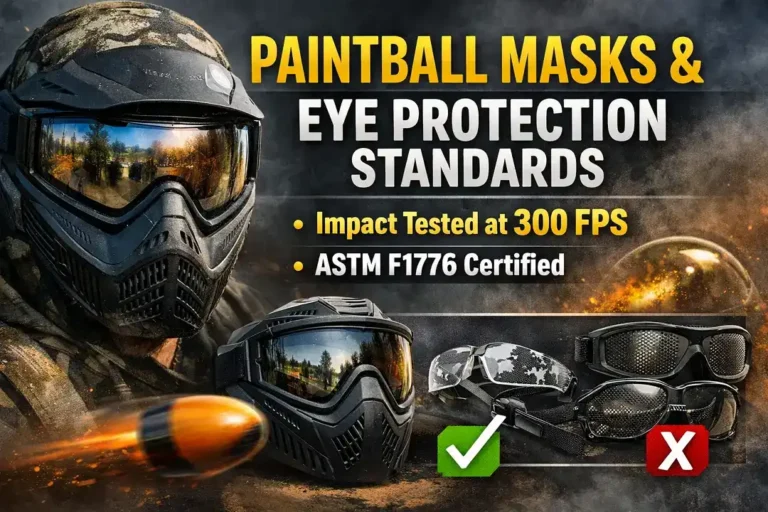
- Paintball mask (ASTM-rated) – protects your eyes and face; required at all times
- Air tank (CO₂ or HPA) – supplies pressure to fire the marker
- Hopper / loader – feeds paintballs into the marker
- Paintballs – the actual ammo (freshness matters)
- Protective clothing & footwear – durable clothes and shoes with grip
You can play without these… but you’ll be happier if you don’t.
- Gloves – protect hands and knuckles
- Pod pack – carry extra paintballs for reloads
- Barrel cover – required off-field at most locations
- Water – hydration keeps you playing longer and thinking clearly
Scroll down and I’ll explain why each item matters, how to choose smart, and what you can safely skip as a beginner.
What Is Paintball Gear? (30-Second Explanation)
Paintball gear is everything you use to play paintball safely and smoothly. It’s sporting equipment designed for fun, but it’s also safety-dependent and field-regulated, which means some items aren’t optional-they’re required.
Here’s the simple way to think about it: paintball gear has three jobs.
Some gear lets you play (like the marker, air tank, and hopper).
Some gear keeps you safe (like the mask and protective clothing).
And some gear keeps the day from sucking (like gloves, water, and the right shoes).
Now the hard truth-and this matters: if a field doesn’t allow it, your opinion doesn’t matter. Fields set the rules for safety and compliance. If your gear doesn’t meet those rules, you’re sitting out. No debates, no exceptions.
Next up, I’ll break down the must-have gear-the stuff you literally cannot play without.
TIER 1 – MUST-HAVE PAINTBALL GEAR
(No gear = no game)
You can bring the coolest “extras” in the world… but Tier 1 is the stuff that makes paintball possible. Think of it like a body:
- Marker = your hands
- Air tank = your lungs
- Hopper = your stomach (feeds)
- Paintballs = your food
If one is missing, the whole system stops.
Now let’s break it down-super clear, but with the real nuances people learn the hard way.
Core Paintball Equipment (You Cannot Play Without These)
Your paintball marker is the air-powered tool that launches paintballs. Most markers shoot in semi-auto (one trigger pull = one shot). It’s also maintainable and upgradeable, which matters later, but as a beginner you only need it to do three things well:
Marker must-do list (the real one):
- Shoot consistently (no random “puffs” or weak shots)
- Not leak air (hissing = problem)
- Not break paint inside (because broken paint turns your marker into a jam machine)
Mechanical vs electronic
A mechanical marker fires using springs and air valves-simple, tough, usually easier to maintain. An electronic marker uses a circuit board to control firing-often smoother and faster, but it depends on batteries, and it’s less forgiving if something’s off.
For most first-timers, mechanical is the “it just works” option. For players who go often, electronic can feel easier to shoot fast and steady-as long as you maintain it.
Caliber matters (.68 vs .50):
- .68 caliber is the standard most fields use-bigger paintball, more common, easiest to find.
- .50 caliber exists (often for younger players or low-impact setups), but it’s less universal.
Paintballs look simple… but they’re actually fragile little “performance items.” They have a brittle shell (often gelatin-based) and they hate two things: time and bad storage.
Why freshness matters (for real):
- Old paintballs can get soft (break inside your marker)
- Or get hard / dimpled / flat-spotted (fly weird, shoot inaccurate)
- Humidity can mess with the shell and make breakage worse
So yes-freshness-sensitive and humidity-sensitive is not marketing. It’s physics.
How to store paintballs like a smart person:
- Keep them cool and dry
- Don’t leave them in a hot car
- Don’t let them sit open in humid air
- If a bag is old, rotate the box gently sometimes (prevents flat spots)
Field paint rules (quick but important):
Some fields have “field paint only” rules. That means you must buy paintballs there for safety, fairness, and cleanup reasons. Even if you bring your own, you may not be allowed to use them. So before you show up with a case of paint, check the field policy.
Your air tank is the power source. No air = no shots. Simple. But the type of air affects how smooth your marker feels.
Why air matters (the short truth):
- Air creates pressure
- Pressure pushes the paintball
- Consistent pressure = consistent shots
CO₂ vs HPA in one sentence:
CO₂ is cheaper and common, but it can be temperature-sensitive, while HPA (compressed air) is usually more consistent and stable.
Now the real nuance beginners miss:
1) Pressure rating + regulator (why your tank isn’t “just a bottle”)
Your tank is pressure-rated, and it has a regulator that controls output. The regulator helps deliver air in a stable way instead of dumping raw pressure straight into the marker. That’s why tanks feel “reliable” when everything is healthy.
2) Temperature sensitivity (CO₂’s biggest personality trait)
CO₂ pressure changes more with temperature swings-cold day, hot day, rapid firing-things can feel less consistent. HPA tends to behave more predictably.
3) Hydro date (do NOT ignore this)
Most fields care about whether your tank is in hydro (hydro test date). If it’s out of date, they may refuse to fill it, even if it “looks fine.”
So the tank can be “working” but still not usable at the field-because compliance wins.
The hopper/loader is the container that sits on top of your marker and feeds paintballs down into the firing chamber. If it feeds poorly, you’ll get:
- gaps in shooting (nothing fires)
- misfeeds (ball doesn’t drop right)
- jams (everything stops)
- broken paint (mess + rage)
Types, super short:
- Gravity-fed: simplest. Paintballs fall in when there’s space.
- Agitated: shakes/agitates to reduce jams.
- Force-fed: actively pushes paintballs in fast (usually best for high firing rates).
Feed rate matters more than people realize:
Your marker can only shoot as fast as your loader can feed. If your marker tries to shoot faster than paint arrives, you get misfeeds, chopping, or weird shot timing.
Battery-powered loaders (important reality):
A lot of good loaders are battery powered. That means:
- dead battery = bad day
- weak battery = inconsistent feeding (the sneaky problem)
So if your loader takes batteries, treat batteries as required gear, not “optional extras.”
Compatibility (quiet dealbreaker):
- Loader must fit the marker’s feedneck properly
- If it’s loose, it can wobble and feed poorly
- If it’s too tight or wrong style, it’s a struggle
If your setup is failing, it’s usually one of these:
- bad paintballs (old, humid, misshapen)
- weak/dead batteries (loader or electronic marker)
- air leak or inconsistent tank output
- hopper feeding too slow for how fast you’re shooting
TIER 2 – SAFETY GEAR (NON-NEGOTIABLE)
If Tier 1 lets you play, Tier 2 lets you play without getting hurt.
And I’m going to be very direct here-there is no skill level, no experience, and no “I’ll be careful” that replaces safety gear.
This is the stuff fields care about the most, refs watch the closest, and your future self will thank you for not cutting corners on.
Paintball Safety Gear (The Most Important Stuff)
Let’s start with the rule that never changes, anywhere, ever:
Not “just for a second.”
Not “I’ll lift it between games.”
Not “it’s fogging, I can’t see.”
A paintball marker is air-powered, shoots at high speed, and paintballs are solid enough to damage eyes permanently. That’s why masks exist, and that’s why fields are strict.
What actually makes a mask “safe”
A real paintball mask is:
- ASTM F1776 certified (this is the safety standard for paintball eye protection)
- Built for direct paintball impact
- Designed to protect eyes, face, and ears
Anything else-shop goggles, airsoft masks, random glasses-is not acceptable at real fields.
Fogging basics (why people hate bad masks)
Fogging happens when:
- Warm air from your breath hits a cold lens
- Moisture builds up with poor ventilation
That’s why thermal lenses matter. A thermal lens has two layers that reduce fog by insulating temperature differences.
Anti-fog coatings help too, but lens design matters more than sprays.
Fit matters more than price (this is huge)
A $200 mask that doesn’t fit your face is worse than a $60 mask that fits perfectly.
A good fit means:
- Snug, not crushing
- No gaps around eyes or cheeks
- Doesn’t shift when you turn your head
- Strap holds it securely without slipping
Comfort = compliance.
If your mask is uncomfortable, people mess with it-and that’s when accidents happen.
This is the gear that turns “paintball hurts” into “paintball is fun.”
Hands get hit first (always)
Your hands are:
- exposed
- constantly moving
- usually the first thing peeking out of cover
That’s why protective gloves matter. Good gloves give:
- Hand protection from direct hits
- Padding over knuckles
- Grip so your marker doesn’t slip
- Breathability so your hands don’t turn into sweat traps
Full-finger gloves protect more. Half-finger gloves give more trigger feel. Both are better than bare hands.
Padding = confidence (this is psychological, not just physical)
Protective padding doesn’t just absorb impact-it changes how you play.
When you know your:
- chest
- elbows
- knees
- forearms
are protected, you:
- move faster
- stay out longer
- slide, kneel, and crawl without hesitation
That confidence boost alone makes beginners play better almost instantly.
Why beginners benefit the most
New players usually:
- flinch more
- hesitate more
- fear getting hit
Padding removes that fear. Once fear goes down, fun goes way up.
Protective apparel like jerseys and pants also bring:
- Padding zones in common hit areas
- Abrasion resistance for sliding and crawling
- Moisture-wicking fabric so sweat doesn’t ruin your day
- Flexibility so you can move freely
If someone ever tells you:
- “You don’t need a good mask”
- “Just tough it out without gloves”
- “Padding is for weak players”
They’re wrong.
Safety gear doesn’t make you weak.
It makes you stay in the game longer.
TIER 3 – COMFORT & PERFORMANCE GEAR
(Not required, but strongly recommended)
Here’s the thing most beginners don’t realize until it’s too late: paintball is physical. You run, crouch, kneel, slide, sweat, and stay on your feet for hours. Tier 3 gear doesn’t decide whether you can play-but it absolutely decides how well you play and how much fun you have.
Comfort isn’t about being fancy. Comfort = energy, confidence, and focus. When your clothes work with you instead of against you, everything feels easier.
What to Wear for Paintball (Comfort = Better Play)
Let’s start with the big mistake almost everyone makes once: wearing regular clothes.
Why durable fabric matters
Paintball fields are rough. You’ll deal with:
- dirt
- gravel
- wood
- turf
- mud
- splinters
- paint
Paintball jerseys and pants are made from abrasion-resistant fabric that can handle crawling, sliding, and kneeling without tearing. Regular clothes? They give up fast.
Padding zones (quiet MVP)
Good paintball apparel has padding built into high-impact areas, like:
- shoulders
- elbows
- knees
- hips
This padding:
- reduces the sting of hits
- protects joints when you drop to the ground
- makes kneeling and sliding way less painful
It’s not about looking “pro.” It’s about staying comfortable long enough to keep playing.
Why jeans suck (no offense to jeans)
Jeans are:
- heavy when wet
- stiff when you move
- slow to dry
- terrible for flexibility
Once jeans get muddy or sweaty, they turn into leg armor you didn’t ask for-and not the good kind. Paintball pants are flexible, lightweight, and moisture-wicking, so they move when you move.
Bottom line:
Paintball clothing is designed to be hit, dragged, and abused. Regular clothes are not.
Your feet decide how confident you feel moving on the field. Period.
Traction > speed
You don’t need fast shoes. You need shoes that don’t slip.
Paintball fields often have:
- wet grass
- loose dirt
- mud
- uneven ground
Shoes with good outdoor grip and traction help you:
- push off faster
- stop without sliding
- change direction without eating dirt
Slipping once can throw off your confidence for the whole game.
Ankle support matters more than people admit
You’ll be stepping on uneven ground, roots, and rocks while moving quickly. Shoes or boots with ankle support help prevent:
- rolled ankles
- awkward landings
- early fatigue
Your legs last longer when your feet feel stable.
Cleats vs boots (quick and honest)
- Cleats: Great traction on grass and dirt, lighter, very popular for speed-focused play
- Boots: Better ankle support, more protection, great for woodsball and rough terrain
Both work. The best choice depends on the field surface-but either is better than running shoes with smooth soles.
You don’t need expensive gear here-but you do need smart choices.
Bad clothing makes paintball tiring.
Bad shoes make paintball frustrating.
Good comfort gear quietly keeps you:
- moving longer
- thinking clearly
- enjoying the game
TIER 4 – ACCESSORIES THAT SAVE YOUR DAY
(Small items. Huge difference.)
Tier 4 is where paintball days are saved or silently ruined. These aren’t the flashy items people show off-but they’re the ones you desperately wish you had once something goes wrong. And something always goes wrong.
Think of Tier 4 as problem-prevention gear. It doesn’t make you shoot better-but it keeps you playing instead of standing on the sidelines annoyed.
Paintball Accessories People Forget (And Regret)
Let’s clear this up immediately:
Pods hold paintballs.
But without a pod pack (harness), those pods:
- sit in your bag
- roll around in pockets
- or stay in the staging area while you’re out of paint
A pod pack is what actually makes pods functional.
Why pod packs matter
A good pod pack gives you:
- Paint storage on your body
- Fast access during games
- A retention system so pods don’t fall out when you run or dive
- Adjustable fit so it stays tight while moving
This matters because running out of paint mid-game sucks. You’re either:
- walking off the field early, or
- hiding uselessly while everyone else plays
Reload speed advantage (this is real performance)
When your marker runs dry:
- fast reload = stay in the fight
- slow reload = get eliminated
Pod packs are designed for quick, muscle-memory reloads. Once you use one, you’ll never want to play without it again.
This is the most underrated item in paintball.
Paintballs break.
It’s not “if.” It’s when.
When paint breaks inside your barrel:
- accuracy disappears
- shots curve wildly
- paint sprays everywhere
- your marker feels broken (even when it isn’t)
Why a barrel swab is a game-saver
A barrel swab (or squeegee) is:
- portable
- absorbent
- designed to clean paint fast
One quick pass through the barrel and:
- accuracy comes back
- marker feels normal again
- you’re back in the game in seconds
Without one?
You’re either wiping with a rag (slow), shaking the marker (does nothing), or walking off the field annoyed.
This single tool can turn a ruined game into a non-issue.
A gear bag seems boring… until you don’t have one.
Paintball gear is:
- muddy
- wet
- paint-covered
- sometimes smelly (let’s be honest)
A good gear bag gives you:
- storage capacity for all your equipment
- compartments so clean and dirty gear don’t mix
- durability to handle weight and abuse
- moisture resistance to keep wet gear from soaking everything else
- portability so you’re not juggling loose items
Keeping wet gear separate (your future self will thank you)
Wet clothes and muddy gear left packed together:
- smell awful
- damage equipment
- make the next game day worse
A proper gear bag lets you contain the mess and deal with it later-without ruining everything else you brought.
These accessories aren’t exciting-but they’re stress reducers.
They:
- keep you playing longer
- fix problems fast
- prevent frustration
- make paintball feel smooth instead of chaotic
If Tier 1 lets you play, and Tier 2 keeps you safe, Tier 4 keeps your day from falling apart.
FIELD-REQUIRED & REAL-WORLD STUFF
(This decides if you play… or sit on the bench)
Everything so far was about gear quality and comfort.
This section is different. This is about permission.
Paintball fields are not your backyard. They have rules, safety systems, and legal responsibilities. You can have perfect gear-but if you ignore this stuff, you’re not playing. No arguments. No exceptions.
Field Rules & Compliance Gear
A barrel cover (also called a barrel sock) is a simple device that goes over the end of your marker’s barrel when you’re not actively playing.
And yes-this tiny thing matters a lot.
Why barrel covers exist
Markers are:
- air powered
- always capable of firing
- sometimes bumped, dropped, or mis-triggered
A barrel cover’s job is discharge prevention. If a marker accidentally fires off the field, the barrel cover catches the paintball and prevents injury.
Often mandatory (this is not optional)
Most fields require:
- barrel cover on at all times when off the field
- no exceptions in staging areas, parking areas, or chrono stations
No barrel cover usually means:
- no play
- or borrowing one from the field (if they’re nice)
- or waiting until you fix it
This is one of those rules that feels small-until you see why it exists.
Before you play, fields will usually send you to a chronograph station.
A chronograph measures how fast your marker shoots paintballs, usually in feet per second (FPS).
FPS limits (why speed is regulated)
Most fields cap velocity around a specific FPS range to:
- prevent injuries
- keep hits from breaking skin
- ensure fair and safe play
Even a well-maintained marker can drift higher or lower depending on:
- air pressure
- temperature
- internal wear
That’s why chrono checks are field requirements, not suggestions.
Why fields care (and why you should too)
Too fast:
- hits hurt more
- gear damage increases
- injury risk goes up
Chrono checks protect:
- other players
- referees
- the field itself
- you
Passing chrono means your gear is safe and compliant, not just powerful.
This is the part people roll their eyes at… until they don’t.
Field waivers (legal reality)
Most fields require a field waiver before you play. This is:
- a legal requirement
- proof of participation permission
- often age dependent (minors need signatures)
No waiver = no play.
Simple as that.
Safety briefings (listen or sit out)
Before games start, refs will explain:
- field boundaries
- surrender rules
- safe zones
- emergency signals
Ignoring the briefing usually leads to:
- penalties
- warnings
- or being pulled from games
The rules aren’t there to ruin fun. They exist to keep everyone safe and playing.
You can have:
- the best marker
- the cleanest gear
- all the confidence in the world
But if you skip:
- barrel cover rules
- chrono checks
- waivers or briefings
You’re not playing paintball-you’re watching it.
BUY VS RENT – DECISION CLARITY
(Spend smart. Don’t waste money.)
This is where a lot of new players mess up. They either buy everything too early, or rent everything forever and never get comfortable. Let’s fix that right now.
Here’s the simple truth: some paintball gear is perfect to rent, and some gear you should own as soon as possible. Knowing the difference saves money and makes the game way more enjoyable.
Should You Buy or Rent Paintball Gear?
If you’re new, these items are totally fine to rent at the field:
Marker
Rental markers are:
- durable
- simple
- built to survive abuse
You don’t need high-end performance on day one. You just need something that shoots reliably and passes safety checks.
Tank
Rental tanks are:
- pressure-rated
- filled on-site
- already field-approved
This avoids worrying about hydro dates, leaks, or compatibility while you’re still learning.
Hopper
Rental hoppers:
- get the job done
- don’t require you to think about feed rates or batteries
At the beginner stage, consistency matters more than speed.
Why renting these makes sense:
You’re still figuring out:
- how often you’ll play
- what style you like
- what feels comfortable
Rent first. Learn. Decide later.
These are the items you’ll benefit from owning early, even if you rent everything else.
Mask
This is the #1 item to buy first. Always.
Why?
- Hygiene: It’s your face. Enough said.
- Fit: Your mask should fit your head, not “average head #437.”
- Comfort: Less fogging, less pressure, better vision = more fun.
A well-fitting mask instantly makes paintball better.
Gloves
Gloves give you:
- hand protection (hands get hit a lot)
- better grip
- more confidence
They’re cheap compared to markers, and the comfort upgrade is huge.
Clothing
Owning your own:
- protective jersey
- durable pants
- proper footwear
means you’re not stuck with random sizes or uncomfortable rentals. Your body stays happier, longer.
Let’s make this crystal clear:
- Hygiene: Masks and gloves are personal. Sharing them isn’t great.
- Fit: Gear that fits you properly works better and feels better.
- Comfort: Comfortable players stay focused, calm, and confident.
You can rent performance gear.
You feel personal gear.
If you’re new:
- Rent: marker, tank, hopper
- Buy first: mask, gloves, clothing
That combo gives you:
- low cost
- low stress
- high comfort
EXPERIENCE-BASED GUIDANCE
(Because gear priorities change as you change)
Paintball gear isn’t one-size-fits-all forever. What you need on day one is very different from what you need after 10 games-or 100. This section helps you avoid the two classic mistakes: overbuying too early and under-upgrading too late.
Think of this as a gear progression, not a shopping list.
Paintball Gear by Experience Level
Your goal here is simple: have fun, feel safe, and finish the day smiling.
What matters most:
- A safe, ASTM-rated mask that fits well (eye + face protection is non-negotiable)
- Comfortable clothing and footwear with traction and flexibility
- Basic understanding of how the marker, air tank, hopper, and paintballs work together
What doesn’t matter yet:
- Rate of fire
- Fancy upgrades
- Brand prestige
At this stage, paintball gear is about learning the game, not optimizing it. Rental markers, tanks, and hoppers are perfectly fine. Your biggest wins come from comfort, visibility, and confidence, not performance stats.
Now things start to shift.
You’ve played enough to know:
- you like the sport
- you hate foggy masks
- running out of paint mid-game is annoying
- bad shoes ruin your energy fast
Gear priorities change here:
- Owning a good mask with a thermal lens becomes huge
- Gloves and protective apparel start to feel “necessary,” not optional
- A pod pack makes games smoother and longer
- A reliable hopper matters more than you expected
You’re still fine renting core items, but now you’re noticing how consistency and comfort affect your performance. Paintball gear starts to feel more personal at this level.
If you play often, gear becomes part of your identity and playstyle.
At this level:
- Consistency beats raw speed
- Maintenance matters
- Fit, balance, and reliability are everything
Players here usually:
- own their marker, air system, hopper
- carry spare parts, batteries, and tools
- pay attention to feed rates, air efficiency, and durability
- upgrade with purpose, not hype
But here’s the important thing:
No competitive player skipped the beginner phase.
They just upgraded when it made sense.
You don’t become better by buying more gear.
You become better when your gear stops getting in the way.
- First-timers need safety and comfort
- Casual players need consistency and confidence
- Competitive players need reliability and efficiency
Let your experience-not marketing-decide your upgrades
Paintball Gear FAQs
Before your first game (or your next one), these are the questions almost everyone asks. If you’ve been wondering whether you’re missing something, buying the wrong thing, or overthinking it-you’re not alone.
These answers come straight from what beginners, casual players, and even field staff deal with every single weekend.
Paintball Gear FAQs
Before your first game (or your next one), these are the questions almost everyone asks. If you’ve been wondering whether you’re missing something, buying the wrong thing, or overthinking it-you’re not alone. These answers come straight from what beginners, casual players, and even field staff deal with every single weekend.
What is the most important piece of paintball gear?
Your paintball mask is the most important piece of gear, without question. It protects your eyes and face, which are irreplaceable, and a good mask also lets you see clearly without fogging. If there’s one thing worth buying early and buying right, it’s the mask.
Can I rent all my paintball gear at the field?
Yes, most fields allow beginners to rent everything they need, including a marker, tank, hopper, and mask. Rental gear works fine for trying the sport, but it’s usually basic and shared. If you plan to play more than once, owning your own mask and gloves makes a huge difference in comfort and hygiene.
What should I wear to play paintball?
Wear durable, flexible clothing that you don’t mind getting dirty, along with shoes that have good traction. Long sleeves, sturdy pants, and footwear with grip and ankle support work best. Avoid shorts, sandals, or smooth-soled running shoes-they make the game harder and less safe.
Is HPA better than CO₂ for paintball?
Most of the time, yes-HPA (compressed air) is more consistent and less affected by temperature changes. CO₂ is cheaper and still works fine for casual play, especially at beginner fields. If you play often, HPA usually feels smoother and more reliable, but beginners don’t need to stress about it.
What paintball gear do beginners forget most often?
Beginners commonly forget extra batteries, water, proper footwear, and a barrel cover. Any one of these can slow down your day or stop you from playing altogether. They’re small items, but they make a big difference in how smooth and enjoyable the day feels.
Does paintball hurt less if you wear padding?
Yes, wearing padding makes a noticeable difference. Padding absorbs impact, reduces sting, and gives you confidence to move more freely. Beginners especially benefit because feeling protected helps them relax and enjoy the game more.
How do I know if my air tank is allowed at the field?
Fields check the hydro test date on air tanks before filling them. Even if your tank looks fine and holds air, it can be rejected if it’s out of date. Always check the hydro date before game day to avoid surprises.
Do I need to bring my own paintballs?
That depends on the field. Some fields allow outside paint, but many require field paint only for safety and cleanup reasons. Always check the field’s rules ahead of time so you don’t bring paint you can’t use.
Is paintball gear different for kids or beginners?
The core gear is the same for everyone: marker, mask, air, hopper, paint, and protective clothing. Some beginner or youth setups use lighter markers or lower-impact options, sometimes with .50 caliber paintballs. Safety rules, however, are the same for all players.
How much should a beginner spend on paintball gear?
Beginners don’t need to spend a lot to have a great experience. Renting performance gear and buying personal items like a mask, gloves, and comfortable clothing is the smartest approach. Play a few times first, then upgrade based on what you actually need-not what looks cool online.
Conclusion
Paintball gear isn’t about having the most stuff-it’s about having the right stuff. When your gear is safe, reliable, and comfortable, the game feels smoother, more fun, and way less stressful. That’s when you actually start enjoying paintball instead of fighting your equipment.
Get the basics right first. Don’t overbuy or chase upgrades before you understand what you truly need. Comfort and safety will always matter more than fire rate, brands, or flashy add-ons.
If you want an easy way to double-check you’re fully prepared, use the Paintball Gear Checklist: Everything You Need Before Playing and show up confident every time.